
Part 1 - Why Your Brain Resists Change and How to Work With It
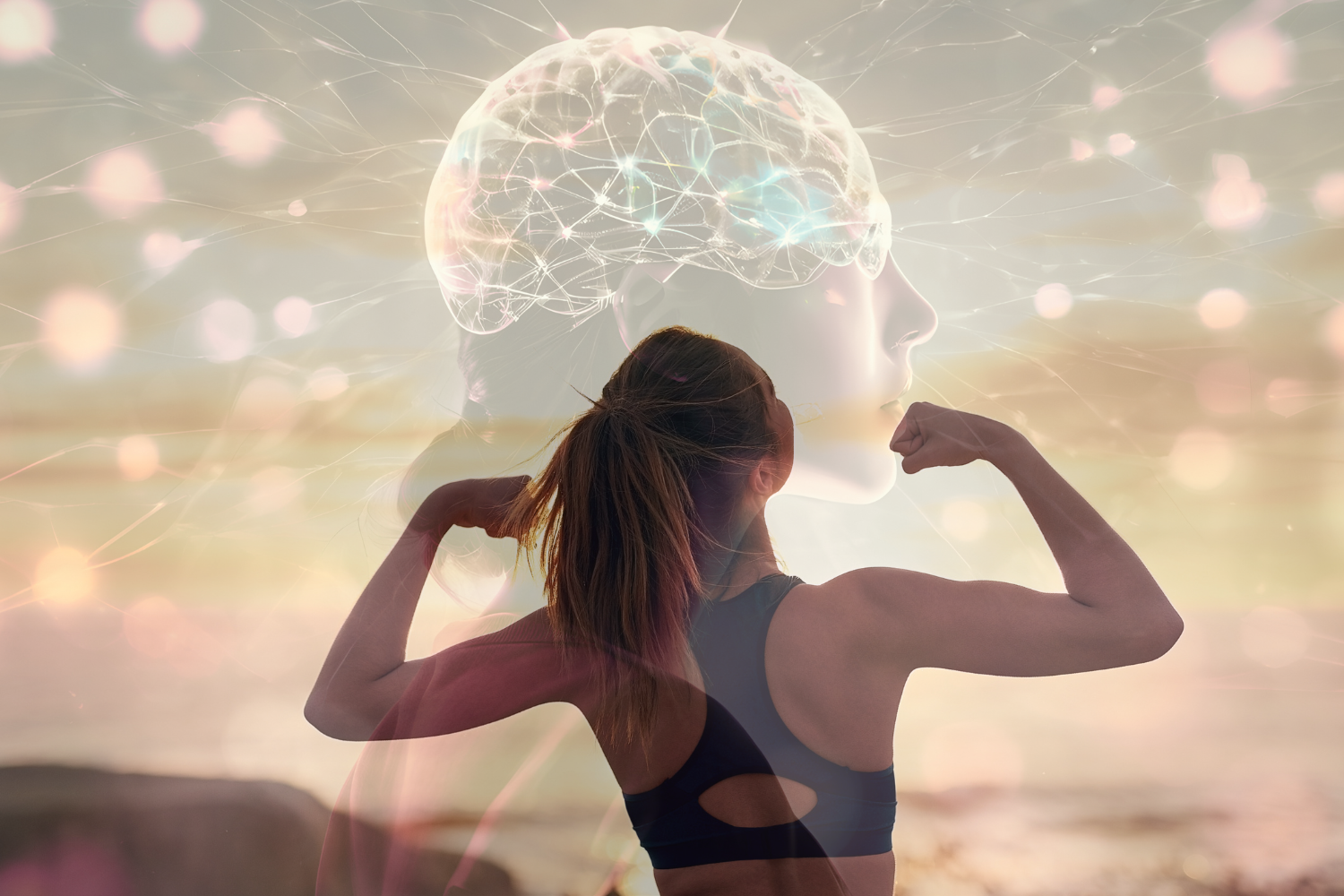
Have you ever promised yourself, “I’ll make more time for myself this week,” or “I’m finally starting that hobby I’ve been putting off,” only to watch another week pass with nothing changed? You’re not alone. Building new habits, learning skills, or staying consistent with personal goals can feel like an uphill battle, but it’s not just a matter of willpower. Your brain is wired in ways that can either support or sabotage your goals. Once you understand how it works, everything changes.
Understanding the Neurobiology of Habit Formation
Habits form when your nervous system learns something new, much of it automatically. That’s why we often repeat familiar patterns even when they don’t serve us, like staying up late doom-scrolling instead of going to bed early. Habits shape our days, mindset, and ultimately our lives. Approximately two-thirds of daily actions occur automatically, and up to 90% involve some level of automaticity. (1) Understanding how the brain forms and sustains habits helps us work with our biology to create lasting change.
Habits develop through changes in neurons, the brain cells responsible for sending and receiving information. Each time a behaviour is repeated, the same networks of neurons fire together. Repetition strengthens these pathways while unused ones weaken. This process, called neuroplasticity, is how the brain rewires itself. Over time, repeated actions become more efficient and automatic, shaping the behaviours, thoughts, and emotional responses that guide daily life. Habits aren’t just patterns; they’re physical pathways in your brain.
Reward Prediction Error, Dopamine, and Habits
Dopamine is a key neurotransmitter involved in motivation, learning, and habit formation. One of its critical roles is signalling reward prediction error, the difference between expected and actual outcomes. When an outcome is better than expected, dopamine firing increases, reinforcing the behaviour that led to the reward. Conversely, when an expected reward fails to appear, dopamine activity drops, signalling the need to adjust behaviour. (2,3)
Over time, as habits form, dopamine shifts from responding to the reward itself to the cue that predicts it, making behaviours automatic. This is why habits stick even when the reward is small or inconsistent: your brain learns to anticipate it and repeat the action. In other words, dopamine helps guide the brain to learn what works, what doesn’t, and when behaviours should be repeated.
Why Change Feels Hard
Your brain is wired for stability. New behaviours, even positive ones, introduce uncertainty, which the brain often interprets as a threat. When this happens, the amygdala, the brain’s threat detector, triggers anxiety or avoidance. Fear doesn’t just make change feel unpleasant; it can suppress the brain’s ability to adapt, affecting regions essential for learning and processing new experiences. (4)
Mental Energy: Why Change Can Feel So Hard
Mental energy also plays a role. When energy is low, even simple tasks can feel overwhelming, and greater mental effort is often linked to negative emotions such as frustration or tension. (5) Under these conditions, your limbic system, the part of the brain involved in emotion, motivation, and automatic behaviours, takes over. Your brain defaults to habits, routines and emotional reactions that require less effort, even if they’re not aligned with your goals.
Neuroplasticity: How the Brain Changes
The good news is that the brain is designed to change. Through neuroplasticity, learning and repeated practice literally reshape neural circuits. Studies show that focused effort doesn’t just improve skill; it produces measurable physical changes in the brain. In one well-known study, adults who learned to juggle over three months showed growth in brain regions involved in tracking moving objects. When they stopped practising, those changes faded, highlighting a key principle: the brain strengthens what you use and lets go of what you don’t. (6)
Other forms of long-term training show similar effects. Musicians develop stronger motor-area connections and better coordination between hemispheres, while bilingual individuals show increased density in language-related regions and stronger connectivity. (7,8) These neural advantages can improve attention, memory, and cognitive flexibility, and even delay cognitive decline later in life.
The takeaway? Whether you’re learning a musical instrument, practising meditation, or simply creating a new daily routine, consistent, targeted practice strengthens neural pathways, making behaviours easier and more automatic over time.
From Goals to Identity
Many people try to build habits by focusing on specific outcomes, like losing weight or reading more. Goal-based habits can spark motivation, but they often fade once the goal is reached or motivation dips. Identity-based habits take a different approach. Instead of asking, “What do I want to achieve?” you ask, “Who am I becoming?” For example, rather than saying, “I want to run a marathon,” you might say, “I’m becoming someone who values movement and wellbeing.”
This approach aligns with how the brain forms habits. When actions consistently match your chosen identity, the brain strengthens the neural pathways that support those behaviours. Through neuroplasticity, repeated identity-aligned actions become easier, more automatic, and more natural over time.
In other words, when you build habits from identity rather than willpower, you’re not just trying to change your behaviour, you’re training your brain to support who you want to become.
Understanding why your brain resists change is the first step in making new behaviours feel easier and more sustainable. Once you appreciate the role of neuroplasticity, dopamine, identity, and mental energy, you can start designing habits that work with your biology instead of against it.
In the next blog, we’ll go deeper into how habits actually form, including the real timeline of habit building, why context matters more than willpower, and the neuroscience behind visualisation.
References
1. Rebar, A. L., Vincent, G., Kovac Le Cornu, K., & Gardner, B. (2025). How habitual is everyday life? An ecological momentary assessment study. Psychology & health, 1–26. Advance online publication. https://doi.org/10.1080/08870446.2025.2561149
2. Deng, Y., Song, D., Ni, J., Qing, H., & Quan, Z. (2023). Reward prediction error in learning-related behaviors. Frontiers in neuroscience, 17, 1171612. https://doi.org/10.3389/fnins.2023.1171612
3. Chang, C. Y., Esber, G. R., Marrero-Garcia, Y., Yau, H. J., Bonci, A., & Schoenbaum, G. (2016). Brief optogenetic inhibition of dopamine neurons mimics endogenous negative reward prediction errors. Nature neuroscience, 19(1), 111–116. https://doi.org/10.1038/nn.4191
4. Wang, Z., Nan, T., Goerlich, K. S., Li, Y., Aleman, A., Luo, Y., & Xu, P. (2023). Neurocomputational mechanisms underlying fear-biased adaptation learning in changing environments. PLoS biology, 21(5), e3001724. https://doi.org/10.1371/journal.pbio.3001724
5. David, L., Vassena, E., & Bijleveld, E. (2024). The unpleasantness of thinking: A meta-analytic review of the association between mental effort and negative affect. Psychological bulletin, 150(9), 1070–1093. https://doi.org/10.1037/bul0000443
6. Draganski, B., Gaser, C., Busch, V., Schuierer, G., Bogdahn, U., & May, A. (2004). Neuroplasticity: changes in grey matter induced by training. Nature, 427(6972), 311–312. https://doi.org/10.1038/427311a
7. Hayakawa, S., & Marian, V. (2019). Consequences of multilingualism for neural architecture. Behavioral and brain functions : BBF, 15(1), 6. https://doi.org/10.1186/s12993-019-0157-z
8. Gallo F, Voits T, Rothman J, Abutalebi J, Shtyrov Y, Myachykov A. Experience-Dependent Neuroplasticity in the Hippocampus of Bilingual Young Adults. eNeuro. 2025 Jun 11;12(6):ENEURO.0128-25.2025. doi: 10.1523/ENEURO.0128-25.2025. PMID: 40379481; PMCID: PMC12177704.
